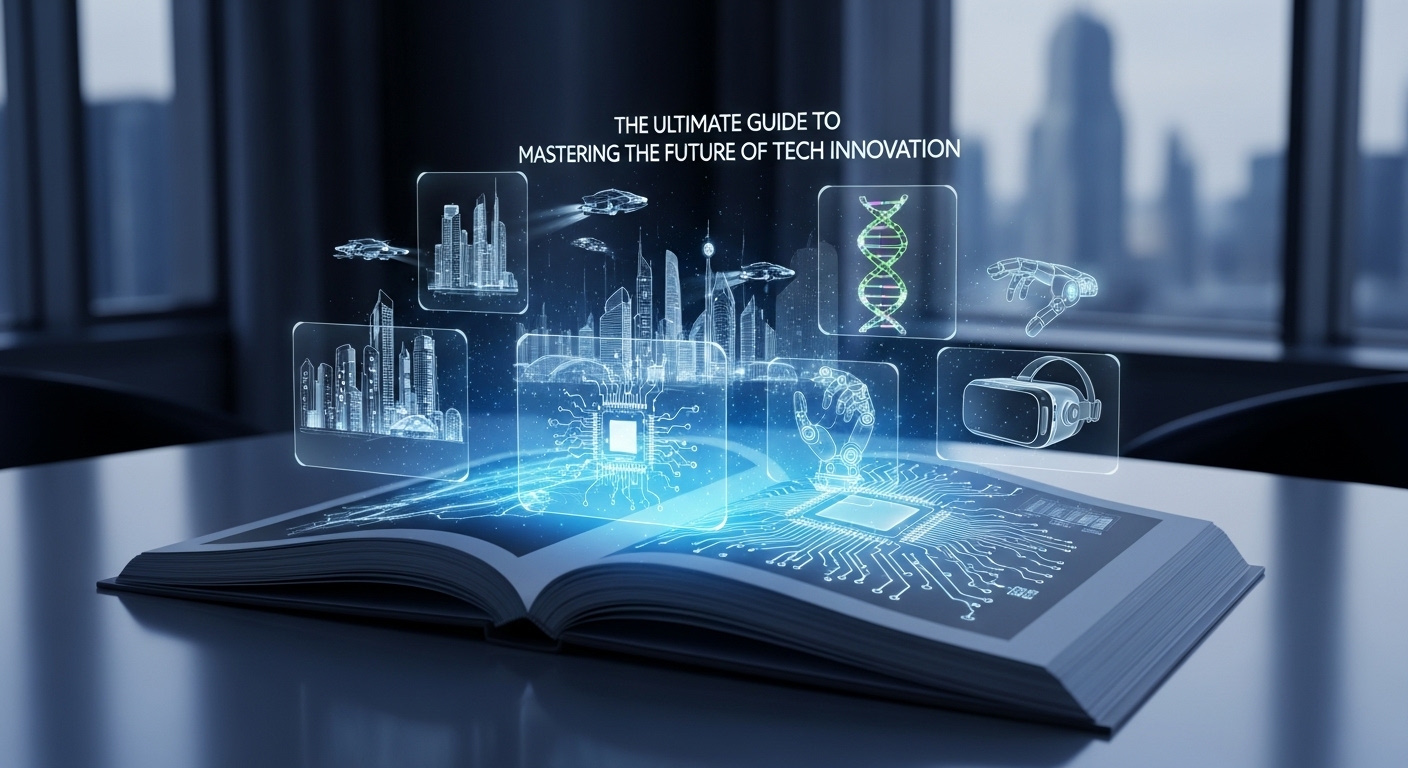
Technology is the lifeblood of modern civilization. It has reshaped societies, economies, and the way humans interact with one another. The story of technology is not just a chronicle of inventions or machines; it is a tale of human ambition, creativity, and the relentless desire to improve the quality of life. From the first steam engines of the Industrial Age to the intelligent algorithms of the digital era, technology has evolved in ways that were once unimaginable. This evolution continues to accelerate, transforming industries, lifestyles, and even the definition of what it means to be human.
The Birth of Modern Technology: The Industrial Revolution
The Industrial Revolution marked the first great technological leap in human history. Beginning in the late 18th century, it transformed agrarian societies into industrial powerhouses. Before this period, most people lived in rural areas, relying on agriculture and manual labor. The invention of the steam engine by James Watt revolutionized production, transportation, and manufacturing. Factories emerged, cities expanded, and new social classes were born.
The Industrial Revolution introduced machines that could perform tasks previously done by hand. The textile industry was among the first to benefit from mechanization, with spinning jennies and power looms increasing productivity exponentially. Railways and steamships soon followed, shrinking distances and enabling global trade on an unprecedented scale. Technology became a catalyst for economic growth and human progress.
However, this transformation was not without its downsides. Industrialization also brought pollution, poor working conditions, and urban overcrowding. The human cost of progress became a central issue, forcing societies to rethink how technology should serve humanity rather than exploit it. Yet, despite these challenges, the Industrial Revolution laid the groundwork for all future technological advancements.
Electricity and Communication: Powering a New Era
The late 19th and early 20th centuries witnessed the second wave of industrial and technological development, powered by electricity and communication technologies. The discovery and application of electricity changed everything. Light bulbs illuminated homes and factories, electric motors powered machinery, and telegraphs and telephones revolutionized communication.
Thomas Edison, Nikola Tesla, and Alexander Graham Bell became household names as their inventions reshaped everyday life. Communication was no longer limited by distance. Messages that once took weeks could now be transmitted in seconds. The spread of electricity also gave rise to household appliances, improving domestic life and reducing manual labor.
This era also marked the beginning of global connectivity. The first transatlantic telegraph cables laid the foundation for international communication, while radio waves enabled the broadcasting of news and entertainment to millions. These innovations brought the world closer together, creating a shared sense of progress and interconnectedness.
The Digital Revolution: Birth of the Computer Age
While electricity changed the physical world, the invention of the computer changed the intellectual one. The mid-20th century saw the emergence of machines that could process information faster than any human. Early computers like ENIAC and UNIVAC were massive, room-sized machines used primarily for military and scientific purposes. Yet, their potential was limitless.
The true revolution came with the invention of the transistor in 1947 and later, the microchip in the 1950s. These tiny components made it possible to build smaller, faster, and more reliable computers. What began as a tool for government and business soon became accessible to ordinary people. By the 1970s and 1980s, personal computers entered homes and offices, transforming how humans worked, learned, and entertained themselves.
The rise of companies like Apple, IBM, and Microsoft defined this era. Software became as valuable as hardware, and the idea of digital data began to take hold. The world was moving from analog to digital, from mechanical to informational. The computer became the new engine of human progress.
The Internet Revolution: A Connected World
If the computer was the heart of modern technology, the internet became its nervous system. Originally developed as a government project to share information between researchers, the internet quickly evolved into a global phenomenon. By the 1990s, it had entered mainstream life, forever changing communication, business, education, and entertainment.
Email replaced letters. Online shopping redefined retail. Websites became digital storefronts and information hubs. Search engines made knowledge instantly accessible, while social media platforms transformed how people interacted and shared their lives. The boundaries between the physical and digital worlds began to blur.
The internet democratized information. Anyone with a connection could learn, publish, or communicate with people across the globe. Entire industries—news, music, film, and education—were disrupted. The rise of e-commerce giants and digital startups proved that the internet was not just a tool but a platform for innovation and entrepreneurship.
However, the internet also brought new challenges. Cybersecurity threats, misinformation, and data privacy issues emerged as major concerns. The digital world, while empowering, also exposed vulnerabilities in human society. Yet, despite its flaws, the internet remains the most transformative invention of the modern age.
Mobile Technology: The Era of Personal Connectivity
The turn of the 21st century introduced another seismic shift: mobile technology. The invention of the smartphone combined the power of the computer and the connectivity of the internet into a single handheld device. Suddenly, people could carry the world in their pockets.
Mobile phones evolved from simple communication tools to powerful mini-computers capable of browsing the web, capturing photos, navigating maps, and running complex applications. The introduction of app stores created entire ecosystems of innovation. Mobile technology redefined industries from transportation to finance, education to entertainment.
Social media platforms like Facebook, Twitter, and Instagram thrived in this mobile-first environment. Messaging apps replaced traditional texting, and mobile payments began to redefine commerce. For billions of people, smartphones became essential tools for daily life—portals to both the digital and physical worlds.
Yet, the mobile revolution also brought new social and psychological challenges. Issues like digital addiction, reduced attention spans, and privacy concerns grew alongside the benefits. The balance between connectivity and well-being became a central question of modern life.
Artificial Intelligence: The Dawn of Machine Intelligence
Among all technological revolutions, the rise of Artificial Intelligence (AI) may be the most transformative yet. AI represents the ability of machines to mimic human intelligence—learning, reasoning, and problem-solving. While the concept dates back decades, only in recent years has AI reached practical, widespread application.
Machine learning, neural networks, and deep learning algorithms have made AI capable of analyzing massive amounts of data and making decisions with incredible accuracy. From virtual assistants and recommendation systems to autonomous vehicles and advanced medical diagnostics, AI is embedded in every aspect of modern society.
AI has transformed industries. In healthcare, it assists in early disease detection and drug discovery. In finance, it powers fraud detection and algorithmic trading. In manufacturing, it drives automation and predictive maintenance. Even creative industries now use AI for music composition, art generation, and content creation.
However, AI also raises ethical questions. The automation of jobs, the potential for bias in algorithms, and the threat of surveillance societies have sparked global debates. As AI becomes more sophisticated, humanity must determine how to align technology with moral and social values. The challenge is not just to create intelligent machines but to ensure they serve humanity responsibly.
The Role of Data: The New Oil of the Digital Age
Data has become the fuel that powers modern technology. Every click, search, and interaction generates data, which companies analyze to improve products, target customers, and predict trends. Big Data technologies allow organizations to process enormous volumes of information, turning raw numbers into actionable insights.
The importance of data extends far beyond business. Governments use data analytics to improve public services and manage crises. Scientists rely on data for climate modeling, medical research, and space exploration. Data-driven decision-making has become a defining feature of the 21st century.
Yet, the rise of data has also sparked concerns about privacy and surveillance. The question of who controls data—and how it is used—has become one of the defining ethical issues of our time. Balancing innovation with privacy will determine the direction of technological progress in the coming decades.
The Internet of Things (IoT): A Smart, Connected World
The Internet of Things (IoT) represents the next phase of connectivity. It involves embedding sensors and communication technology into everyday objects, allowing them to collect and share data. From smart thermostats and wearable fitness trackers to connected cars and cities, IoT is weaving technology into the fabric of daily life.
In homes, IoT enables automation—lights that adjust automatically, appliances that can be controlled remotely, and security systems that monitor activity in real-time. In industry, IoT enhances efficiency through predictive maintenance and supply chain optimization. In cities, IoT supports traffic management, waste reduction, and energy efficiency.
The ultimate goal of IoT is to create environments that are responsive, efficient, and intelligent. However, this interconnectedness also increases vulnerability to cyberattacks and data breaches. As technology becomes more integrated into physical infrastructure, securing IoT systems will be crucial to maintaining trust and safety.
Blockchain and Decentralization: Reimagining Trust
Another groundbreaking innovation of recent years is blockchain technology. Originally developed as the foundation for cryptocurrencies, blockchain has evolved into a system for creating decentralized, transparent, and tamper-proof records.
Blockchain’s greatest contribution lies in its ability to eliminate intermediaries. Whether in finance, supply chains, or voting systems, it allows transactions and data exchanges to occur securely and transparently. Each transaction is recorded in a block, linked to previous ones, and verified through a distributed network, making fraud nearly impossible.
Beyond finance, blockchain has potential in healthcare, logistics, intellectual property, and even governance. It represents a shift from centralized systems of control to distributed systems of trust. The technology is still evolving, but its implications for transparency, accountability, and autonomy are profound.
The Future of Technology: Human and Machine Convergence
As we move further into the 21st century, the boundaries between humans and technology are becoming increasingly blurred. Advances in biotechnology, neuroscience, and robotics are giving rise to a new era of human-machine integration.
Wearable devices already monitor our health in real-time. Brain-computer interfaces are being developed to restore mobility to paralyzed individuals or enhance cognitive abilities. Robotics and prosthetics are becoming more advanced, bringing the promise of augmented humanity closer to reality.
Meanwhile, emerging technologies such as quantum computing, nanotechnology, and genetic engineering hold immense potential. Quantum computers could solve problems beyond the reach of classical machines. Nanotechnology could revolutionize medicine, materials, and energy. Genetic editing tools like CRISPR could eradicate hereditary diseases and extend human lifespan.
The convergence of these technologies could redefine what it means to be human. But this future also poses deep philosophical and ethical questions. How much should humans alter their biology? Who will have access to such advancements? How will societies adapt to a world where the line between natural and artificial is no longer clear?
Challenges in the Age of Technology
Despite its promise, technological progress comes with significant challenges. One major concern is the impact on employment. Automation and AI threaten to replace millions of jobs, particularly in manufacturing, transportation, and service industries. While new jobs will emerge, the transition could lead to economic inequality and social disruption.
Cybersecurity is another pressing issue. As more systems become interconnected, the risk of cyberattacks increases. From identity theft to critical infrastructure sabotage, digital threats can have devastating real-world consequences. Ensuring digital safety requires not only advanced technology but also global cooperation.
Environmental impact is yet another challenge. The production and disposal of electronic devices contribute to pollution and resource depletion. Data centers consume enormous amounts of energy. As technology advances, sustainability must become a core priority.
Finally, ethical dilemmas surrounding privacy, surveillance, bias, and autonomy must be addressed. Technology should empower humanity, not control it. Achieving this balance requires thoughtful governance, responsible innovation, and a commitment to human values.
Conclusion: Technology as Humanity’s Mirror
The evolution of technology is ultimately the story of humanity itself—a reflection of our creativity, ambition, and contradictions. Each technological leap has brought both progress and peril. The steam engine gave us industry but polluted our skies. The internet gave us knowledge but also misinformation. Artificial Intelligence promises convenience and efficiency but raises questions about control and ethics.
The challenge for the future is not to stop technological progress but to guide it wisely. We must design technologies that respect human dignity, promote equality, and sustain the planet. The goal is not to create a world ruled by machines, but one where technology enhances what is best about humanity—our empathy, intelligence, and imagination.
Technology has carried us from the factories of the 18th century to the digital frontiers of the 21st. The journey is far from over. As we stand on the threshold of the next great transformation, the question is not what technology will do to us, but what we will do with it.
About the Author